
By Clear Skin Dermatology & Cosmetic Surgery
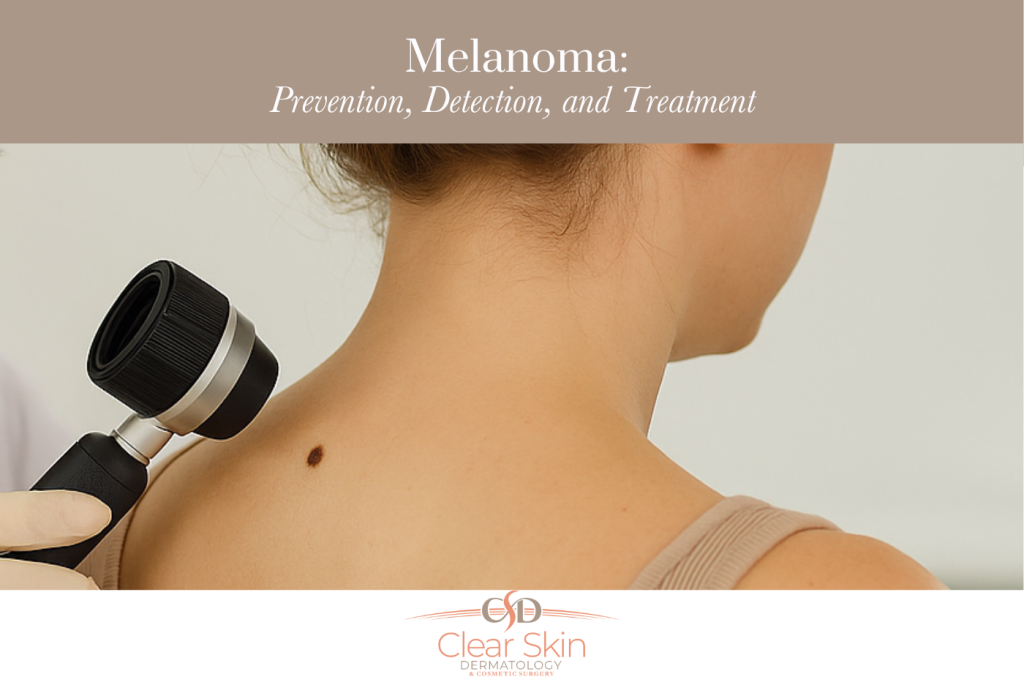
What Is Melanoma?
Melanoma is a serious type of skin cancer that begins in the pigment-producing cells known as melanocytes. While it’s less common than other types of skin cancer, melanoma is far more dangerous due to its ability to spread rapidly to other parts of the body. Early detection and treatment are crucial for achieving the best outcomes.
Why Melanoma Awareness Month Matters
May is recognized as Melanoma Awareness Month, a time to educate the public about the importance of sun safety, early detection, and regular skin checks. At Clear Skin Dermatology & Cosmetic Surgery, our goal is to empower patients to take proactive steps in protecting their skin health through routine screenings and proper sun protection habits, guided by our experienced providers.
Warning Signs of Melanoma
Melanoma can appear anywhere on the body, but it most commonly develops on areas exposed to the sun such as the face, arms, back, and legs. The key to early detection lies in recognizing changes in your skin. Use the ABCDE rule when checking your moles and freckles:
A – Asymmetry: One half of the mole looks different from the other.
B – Border: Edges are irregular, ragged, blurred, or notched.
C – Color: Uneven shades of brown, black, red, white, or blue.
D – Diameter: Larger than 6mm (about the size of a pencil eraser).
E – Evolving: Any change in size, shape, or color—or new symptoms such as bleeding or itching.
If you notice any of these warning signs, it’s important to schedule a professional skin exam as soon as possible.
How Melanoma Is Diagnosed
Providers at Clear Skin Dermatology & Cosmetic Surgery use advanced diagnostic techniques to accurately identify melanoma, which may include:
- Dermatoscopic evaluation: A handheld tool magnifies and illuminates skin lesions for closer inspection.
- Skin biopsy: A small tissue sample is taken and analyzed under a microscope to confirm the diagnosis.
- Molecular testing: In some cases, molecular tests may be used to identify specific gene mutations that help guide treatment decisions.
Treatment Options for Melanoma
If diagnosed early, melanoma can often be treated successfully with surgical removal. Depending on individual needs, treatment options may include:
- Excisional surgery: The melanoma and surrounding tissue are removed to help ensure all cancerous cells are eliminated.
- Mohs micrographic surgery: Used for certain melanomas, especially those on cosmetically sensitive areas like the face, offering precision and minimal tissue loss.
- Targeted therapy or immunotherapy: For more advanced cases, medications may help the immune system attack cancer cells or block specific growth pathways.
Your provider will recommend a treatment plan based on the stage and type of melanoma, overall health considerations, and cosmetic goals.
Prevention Tips
Preventing melanoma starts with protecting your skin year-round:
- Apply sunscreen (SPF 30 or higher) daily, even on cloudy days.
- Avoid tanning beds and prolonged sun exposure.
- Wear protective clothing, hats, and sunglasses.
- Seek shade during peak sun hours (10 AM–4 PM).
- Schedule regular skin checks with a qualified skin care provider.
Q&A: Melanoma Awareness and Skin Health
Q: How often should I have a skin check?
A: Most adults should have a professional skin exam once a year. Individuals with a history of skin cancer, fair skin, or excessive sun exposure may benefit from more frequent visits, as recommended by their provider.
Q: Can melanoma appear on areas not exposed to the sun?
A: Yes. Melanoma can occur on the soles of the feet, palms, under the nails, or even inside the mouth and eyes. Performing full-body skin exams is important.
Q: What is the survival rate for melanoma?
A: When detected early, the 5-year survival rate for melanoma is over 99%. The prognosis decreases if the cancer spreads to lymph nodes or distant organs, highlighting the importance of early detection.
Q: Does having many moles increase my risk?
A: Yes. People with numerous or atypical moles have a higher risk of developing melanoma and should be especially diligent with self-checks and routine skin evaluations.
Q: Is melanoma hereditary?
A: In some cases, yes. A family history of melanoma can increase risk, so it’s important to share this information with your provider.
Q: Can I still get melanoma if I use sunscreen?
A: Sunscreen significantly reduces risk but does not eliminate it entirely. Consistent application and additional sun protection measures are essential.
Protect Your Skin — Schedule Your Mole Check Today
Melanoma is one of the most preventable cancers when detected early. At Clear Skin Dermatology & Cosmetic Surgery, our knowledgeable providers offer comprehensive skin cancer screenings, mole evaluations, and advanced treatment options.
Don’t wait to protect your skin — schedule your skin check today.
Contact Information
St. Charles Office
2560 Foxfield Rd Suite 100
St. Charles, IL 60174
📧 stc@cskinderm.com
📞 (630) 443-8855
Oak Park Office
1050 Chicago Ave
Oak Park, IL 60302
📧 op@cskinderm.com
📞 (708) 383-6366
Sycamore Office
2128 Midlands Ct, Suite 106
Sycamore, IL 60178
📧 syc@cskinderm.com
📞 (815) 895-9100