
Our skin is our body’s largest organ—and one of the most visible indicators of our overall health. While moles are often harmless, they can sometimes be an early sign of skin cancer, including melanoma, the most dangerous form. Regular mole checks are a vital part of preventive skin care, helping detect changes before they become serious. At Clear Skin Dermatology & Cosmetic Surgery, our providers use advanced diagnostic techniques to evaluate moles and help ensure your skin stays healthy.
What Is a Mole Check?
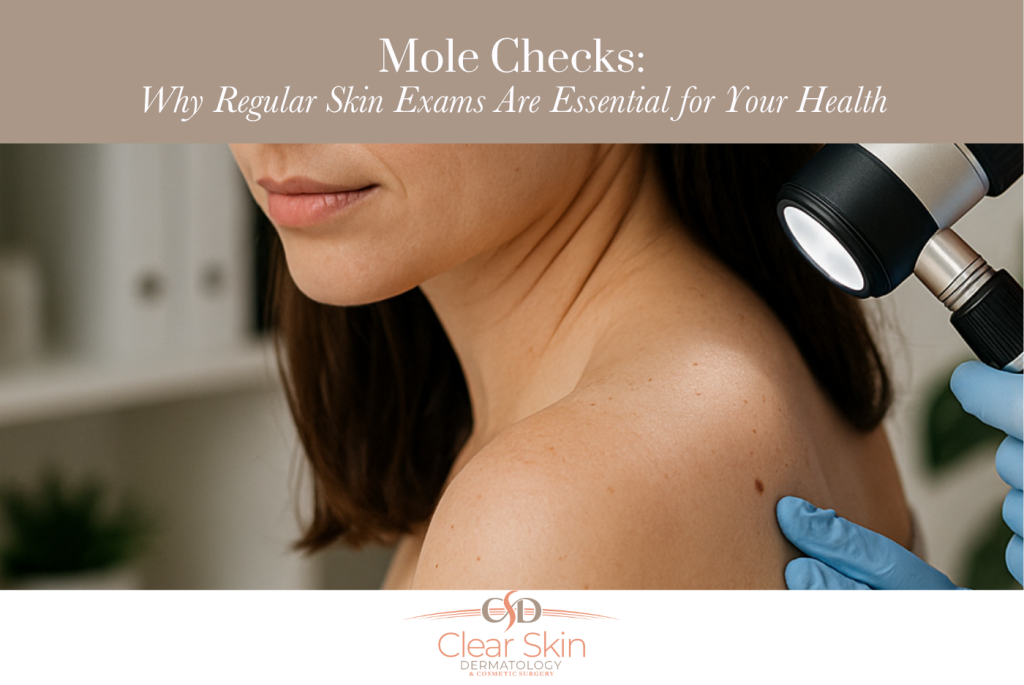
A mole check is a thorough examination of your skin to assess moles, freckles, and other pigmented lesions. During the appointment, your provider evaluates each mole’s size, shape, color, and border using dermoscopy or magnification tools to identify irregularities that may indicate atypical or precancerous changes.
At Clear Skin Dermatology & Cosmetic Surgery, our experienced providers perform comprehensive full-body skin exams in a comfortable and private environment. The goal is early detection—catching any suspicious spots long before they pose a health risk.
Why Regular Mole Checks Are Important
Even if your skin looks clear, new moles or subtle changes can occur at any time. Skin cancer is highly treatable when caught early, but delayed diagnosis can lead to more invasive treatment or spread. Regular mole checks allow providers to:
- Identify early warning signs of melanoma and other skin cancers
- Track mole changes over time with professional imaging or charting
- Perform biopsies when necessary for accurate diagnosis
- Educate you on sun safety and skin self-exams
People with fair skin, a family history of skin cancer, or frequent sun exposure are especially encouraged to schedule annual mole checks.
What to Expect During Your Appointment
A mole check is quick, comfortable, and non-invasive. You’ll be asked to change into a gown, and your provider will examine your skin from head to toe, including the scalp, behind the ears, between the toes, and other less visible areas. If any moles appear suspicious, your provider may photograph them for monitoring or recommend a biopsy for further evaluation.
At Clear Skin Dermatology & Cosmetic Surgery, we combine expert clinical assessment with the latest diagnostic technologies to ensure accuracy and peace of mind.
Tips for Monitoring Moles at Home
Between professional visits, perform monthly self-exams using the ABCDE rule to watch for changes:
- A – Asymmetry: One half doesn’t match the other
- B – Border: Irregular, scalloped, or blurred edges
- C – Color: Multiple colors or uneven shading
- D – Diameter: Larger than a pencil eraser (6mm)
- E – Evolving: Changes in size, color, shape, or new symptoms like itching or bleeding
If you notice any of these changes, schedule an appointment right away.
Q&A: Common Questions About Mole Checks
Q: How often should I get a mole check?
A: Most adults should have a professional skin exam once a year. However, if you have many moles, fair skin, a personal or family history of skin cancer, or significant sun exposure, your provider may recommend more frequent visits.
Q: Are mole checks covered by insurance?
A: In many cases, yes—especially if a suspicious lesion is identified or you have a documented history of skin changes. Our staff can assist you with insurance questions before your visit.
Q: What happens if a provider finds an unusual mole?
A: If a mole looks suspicious, a small biopsy may be taken under local anesthesia. The tissue is then sent to a lab for analysis. If skin cancer is detected, your provider will discuss treatment options, which may include surgical excision or specialized procedures.
Q: Can moles go away on their own?
A: Some benign moles can lighten or fade naturally over time. However, any change in appearance should be evaluated to rule out malignancy.
Q: What’s the difference between a mole and melanoma?
A: A mole is a common cluster of pigmented cells, usually uniform in color and shape. Melanoma, on the other hand, often appears asymmetrical with irregular borders and multiple shades of brown, black, or red. Any new or changing lesion should be examined promptly.
Protect Your Skin—Schedule a Mole Check Today
Early detection saves lives. Whether you’ve noticed a new mole, changes in an existing one, or simply want peace of mind, our expert providers are here to help. At Clear Skin Dermatology & Cosmetic Surgery, we provide compassionate, expert care across our three convenient Illinois locations.
Contact Information
St. Charles Office
2560 Foxfield Rd, Suite 100
St. Charles, IL 60174
📧 stc@cskinderm.com
📞 (630) 443-8855
Oak Park Office
1050 Chicago Ave
Oak Park, IL 60302
📧 op@cskinderm.com
📞 (708) 383-6366
Sycamore Office
2128 Midlands Ct, Suite 106
Sycamore, IL 60178
📧 syc@cskinderm.com
📞 (815) 895-9100
👉 Request an Appointment: Click here to schedule online