
 Presented by Clear Skin Dermatology & Cosmetic Surgery
Basal Cell Carcinoma (BCC) is the most common form of skin cancer in the United States. While it’s rarely life-threatening, early detection and treatment are essential to prevent potential disfigurement and complications. At Clear Skin Dermatology & Cosmetic Surgery, our expert dermatologists are dedicated to educating patients and providing personalized, effective care for BCC and other skin concerns.
What Is Basal Cell Carcinoma?
Basal Cell Carcinoma is a type of non-melanoma skin cancer that originates in the basal cells—small, round cells found in the lower part of the epidermis. It typically results from prolonged exposure to Ultra® XCviolet (UV) radiation from the sun or tanning beds.
Though it grows slowly and seldom spreads (metastasizes), untreated BCC can invade nearby tissue, including bone, and cause significant damage.
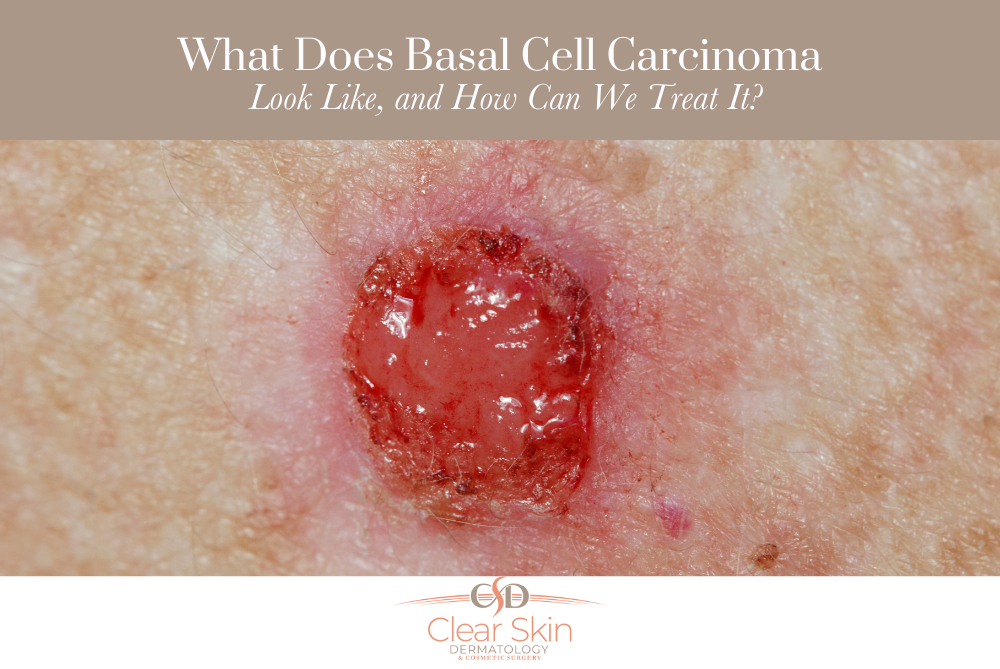
What Does Basal Cell Carcinoma Look Like?
BCC may present in several ways, which is why it’s often mistaken for a harmless skin issue such as a pimple or scar. Common appearances include:
- Shiny or Pearly Bumps: Often pink or flesh-colored, especially on the face, ears, and neck.
- Flat, Scaly Patches: Reddish or brown patches, often on the back or chest, that may resemble eczema or psoriasis.
- Sores That Don’t Heal: Lesions that bleed, ooze, crust, or heal and return.
- White, Waxy, or Scar-Like Areas: These may lack clearly defined borders and can be easily overlooked.
If you notice any skin lesion that changes, persists, or doesn’t heal, it’s important to consult a dermatologist.
How Is Basal Cell Carcinoma Diagnosed?
Diagnosis typically begins with a visual examination during a skin check. If BCC is suspected, a skin biopsy will be performed. This involves removing a small piece of the lesion and examining it under a microscope to confirm the diagnosis.
Treatment Options for Basal Cell Carcinoma
At Clear Skin Dermatology & Cosmetic Surgery, we offer a range of advanced treatments tailored to the type, size, location, and depth of the BCC, as well as the patient’s medical history and cosmetic preferences. Common treatment options include:
1. Mohs Micrographic Surgery
- What it is: A precise surgical technique that removes the cancer layer by layer while preserving healthy tissue.
- Best for: High-risk areas such as the face, ears, or hands.
- Benefits: Highest cure rate, minimal scarring.
2. Excisional Surgery
- What it is: The entire tumor is cut out, along with a margin of healthy tissue.
- Best for: Most types of BCC.
- Benefits: Effective and widely used.
3. Electrodessication and Curettage (ED&C)
- What it is: The lesion is scraped off and the area is cauterized to kill remaining cancer cells.
- Best for: Small, superficial BCCs.
- Benefits: Quick and minimally invasive.
4. Cryotherapy
- What it is: Freezing cancerous cells using liquid nitrogen.
- Best for: Superficial lesions.
- Benefits: Non-surgical option with minimal downtime.
5. Topical Medications
- What it is: Prescription creams like imiquimod or 5-fluorouracil are used to treat BCC over time.
- Best for: Superficial BCCs.
- Benefits: Non-invasive and done at home.
6. Radiation Therapy
- What it is: High-energy beams are used to destroy cancer cells.
- Best for: Patients who cannot undergo surgery.
- Benefits: No incisions, but requires multiple sessions.
Preventing Basal Cell Carcinoma
- Use Broad-Spectrum Sunscreen: SPF 30 or higher, reapplied every two hours.
- Avoid Tanning Beds: They significantly increase your risk of BCC and other skin cancers.
- Wear Protective Clothing: Hats, sunglasses, and long sleeves when outdoors.
- Perform Regular Skin Checks: Monitor for new or changing moles and lesions.
- See a Dermatologist Annually: especially if you have a history of skin cancer or excessive sun exposure.
FAQ: Basal Cell Carcinoma
Q: Is basal cell carcinoma dangerous?
A: While BCC rarely spreads to other organs, it can grow deep into the skin and nearby structures if untreated, leading to disfigurement. Early treatment is key.
Q: Who is at risk for BCC?
A: People with fair skin, light eyes, a history of sunburns, frequent sun exposure, or tanning bed use are at higher risk. Family history also plays a role.
Q: Can BCC return after treatment?
A: Yes, BCC can recur in the same spot or develop elsewhere. Regular follow-up visits are important for monitoring.
Q: Does BCC hurt?
A: BCC is typically painless but may itch, bleed, or become tender as it grows.
Q: Can I prevent BCC?
A: Yes—sun protection and regular skin screenings significantly reduce your risk.
Q: Is Mohs surgery better than other treatments?
A: Mohs offers the highest cure rate and is especially useful for cosmetically sensitive areas. Your dermatologist will recommend the best approach based on your case.
Contact Clear Skin Dermatology & Cosmetic Surgery
Whether you’re concerned about a suspicious spot or just want to stay proactive with your skin health, our board-certified dermatologists are here to help.
📍 St. Charles Office
2560 Foxfield Rd Suite 100
St. Charles, IL 60174
📧 stc@cskinderm.com
📞 (630) 443-8855
📍 Oak Park Office
1050 Chicago Ave
Oak Park, IL 60302
📧 op@cskinderm.com
📞 (708) 383-6366
📍 Sycamore Office
2128 Midlands Ct, Suite 106
Sycamore, IL 60178
📧 syc@cskinderm.com
📞 (815) 895-9100
🌐 Visit Us Online
📅 Request An Appointment
At Clear Skin Dermatology & Cosmetic Surgery, your skin’s health is our priority. If you’ve noticed any unusual skin changes or want to schedule your annual skin check, we encourage you to reach out to one of our convenient locations today.