
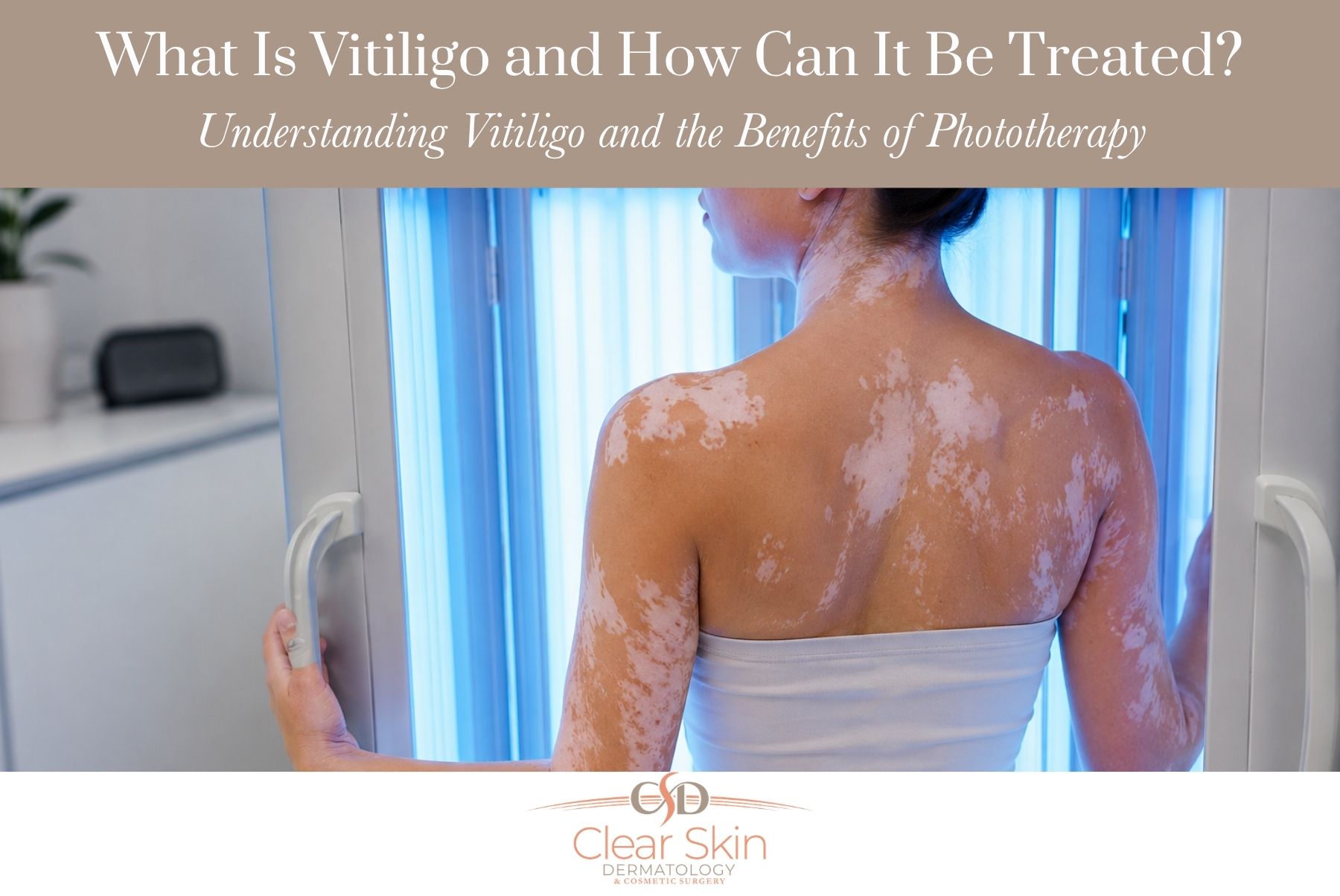
Vitiligo is a chronic skin condition that causes patches of skin to lose their natural pigment, resulting in lighter or white areas on the body. Although vitiligo is not contagious or physically harmful, it can significantly impact a person’s confidence and emotional well-being. Fortunately, modern dermatology offers several effective treatment options to help restore skin color and improve quality of life — with phototherapy being one of the most successful and widely recommended treatments.
At Clear Skin Dermatology & Cosmetic Surgery, our board-certified dermatology team specializes in diagnosing and treating vitiligo using advanced therapies tailored to each patient’s unique skin type and condition severity.
What Is Vitiligo?
Vitiligo is an autoimmune skin disorder in which the body’s immune system mistakenly attacks melanocytes — the cells responsible for producing melanin, the pigment that gives skin its color. As melanocytes are destroyed, white or depigmented patches begin to appear on the skin.
Vitiligo can affect people of all ages, genders, and ethnic backgrounds. The condition may develop gradually or suddenly and can appear anywhere on the body, including:
- Face
- Hands
- Arms
- Feet
- Around the eyes or mouth
- Scalp
- Genital area
Some individuals may experience only a few isolated spots, while others may have more widespread pigment loss.
What Causes Vitiligo?
The exact cause of vitiligo is not fully understood, but experts believe several factors may contribute, including:
Autoimmune Disorders
Vitiligo is commonly associated with autoimmune conditions where the immune system attacks healthy cells.
Genetics
Family history can play a role, as vitiligo sometimes runs in families.
Stress or Skin Trauma
Physical or emotional stress, sunburns, or skin injuries may trigger or worsen vitiligo in some patients.
Environmental Factors
Certain environmental exposures may contribute to the development of the condition.
Common Symptoms of Vitiligo
The primary symptom of vitiligo is the appearance of white patches on the skin. Additional signs may include:
- Premature whitening or graying of hair
- Loss of color inside the mouth or nose
- Changes in eye color
- Symmetrical depigmented patches
Vitiligo is not painful, but the emotional effects can be significant for many patients.
How Is Vitiligo Diagnosed?
A dermatologist can usually diagnose vitiligo through a physical skin examination. In some cases, additional tests may be recommended, including:
- Wood’s lamp examination
- Skin biopsy
- Blood tests to check for autoimmune conditions
Early diagnosis is important because treatment is often more effective when started sooner.
Vitiligo Treatment Options
There is currently no permanent cure for vitiligo, but several treatments can help restore pigment, slow progression, and improve the appearance of affected skin.
Treatment options may include:
- Topical corticosteroids
- Topical immunomodulators
- Oral medications
- Excimer laser therapy
- Skin grafting procedures
- Depigmentation therapy
- Phototherapy
Among these treatments, phototherapy remains one of the most effective and widely recommended approaches for many vitiligo patients.
How Phototherapy Helps Treat Vitiligo
What Is Phototherapy?
Phototherapy is a medically supervised treatment that uses controlled ultraviolet (UV) light exposure to stimulate melanocytes and encourage repigmentation of the skin.
The most common form used for vitiligo is Narrowband UVB (NB-UVB) phototherapy.
How Does Narrowband UVB Phototherapy Work?
Narrowband UVB therapy delivers a specific wavelength of ultraviolet light to affected skin areas. This process helps:
- Stimulate melanin production
- Activate remaining melanocytes
- Slow the immune system’s attack on pigment cells
- Encourage repigmentation over time
Treatments are typically performed several times per week under professional supervision.
Benefits of Phototherapy for Vitiligo
Phototherapy offers several important advantages:
Non-Invasive Treatment
No surgery or injections are required.
Effective for Large Areas
Phototherapy can successfully treat widespread vitiligo.
Safe for Long-Term Use
When monitored by experienced dermatologists, NB-UVB therapy is considered safe and effective.
Gradual Natural-Looking Results
Many patients notice gradual repigmentation that blends naturally with surrounding skin.
Suitable for Various Skin Types
Phototherapy can be customized for different skin tones and severities.
What Areas Respond Best to Phototherapy?
Some body areas respond better than others. Typically, the best results are seen on:
- Face
- Neck
- Trunk
Hands and feet can be more resistant to treatment but may still improve over time.
How Long Does Phototherapy Take to Work?
Results vary by patient, but many individuals begin seeing improvement after several weeks to a few months of consistent treatment.
Factors affecting success include:
- Duration of vitiligo
- Location of patches
- Skin type
- Consistency of treatments
- Overall health
Because vitiligo treatment requires patience, maintaining a regular treatment schedule is essential.
Is Phototherapy Safe?
Yes. Narrowband UVB phototherapy is considered one of the safest and most effective treatments for vitiligo when administered under dermatological supervision.
Potential temporary side effects may include:
- Mild redness
- Dryness
- Temporary irritation
Your dermatologist will carefully monitor treatment settings to minimize risks and maximize results.
Emotional Impact of Vitiligo
Vitiligo can affect more than just the skin. Many patients experience emotional distress, anxiety, or reduced self-esteem. Seeking professional treatment often helps patients regain confidence and feel more comfortable in their skin.
At Clear Skin Dermatology & Cosmetic Surgery, we understand the emotional and physical challenges of living with vitiligo and are committed to providing compassionate, personalized care.
When Should You See a Dermatologist for Vitiligo?
You should schedule an evaluation if you notice:
- New white patches on the skin
- Rapid spreading of depigmentation
- Changes in hair or eye color
- Emotional distress related to skin appearance
Early treatment can often improve outcomes and help slow disease progression.
Comprehensive Q&A About Vitiligo and Phototherapy
Is vitiligo contagious?
No. Vitiligo is not contagious and cannot spread from person to person.
Can vitiligo be cured permanently?
There is currently no permanent cure, but treatments like phototherapy can significantly improve pigmentation and help control progression.
What is the best treatment for vitiligo?
Treatment depends on the severity and extent of the condition. Narrowband UVB phototherapy is considered one of the most effective treatments for many patients.
Does phototherapy hurt?
No. Phototherapy is painless. Most patients tolerate treatments very well.
How often do I need phototherapy treatments?
Most patients receive treatment two to three times per week, depending on their treatment plan.
Can children receive phototherapy for vitiligo?
Yes. Narrowband UVB phototherapy is often considered safe for children under dermatological supervision.
Will my skin return completely to normal?
Results vary. Some patients experience substantial repigmentation, while others may achieve partial improvement.
Is vitiligo caused by stress?
Stress alone does not directly cause vitiligo, but it may trigger or worsen the condition in some individuals.
Does insurance cover phototherapy?
Many insurance plans may cover medically necessary vitiligo treatment. Our office can help discuss coverage options.
How soon should I start treatment?
Early treatment is often associated with better outcomes, so it’s important to consult a dermatologist as soon as symptoms appear.
Schedule a Vitiligo Consultation Today
If you are experiencing symptoms of vitiligo or would like to learn more about phototherapy treatment options, the experienced team at Clear Skin Dermatology & Cosmetic Surgery is here to help. We provide advanced dermatologic care with personalized treatment plans designed to help patients achieve healthier, more confident skin.
Contact Information
Clear Skin Dermatology & Cosmetic Surgery
St. Charles Office
2560 Foxfield Rd, Suite 100
St. Charles, IL 60174
📧 stc@cskinderm.com
📞 (630) 443-8855
Oak Park Office
1050 Chicago Ave
Oak Park, IL 60302
📧 op@cskinderm.com
📞 (708) 383-6366
Sycamore Office
2128 Midlands Ct, Suite 106
Sycamore, IL 60178
📧 syc@cskinderm.com
📞 (815) 895-9100
👉 Request an Appointment: Click here to schedule online