
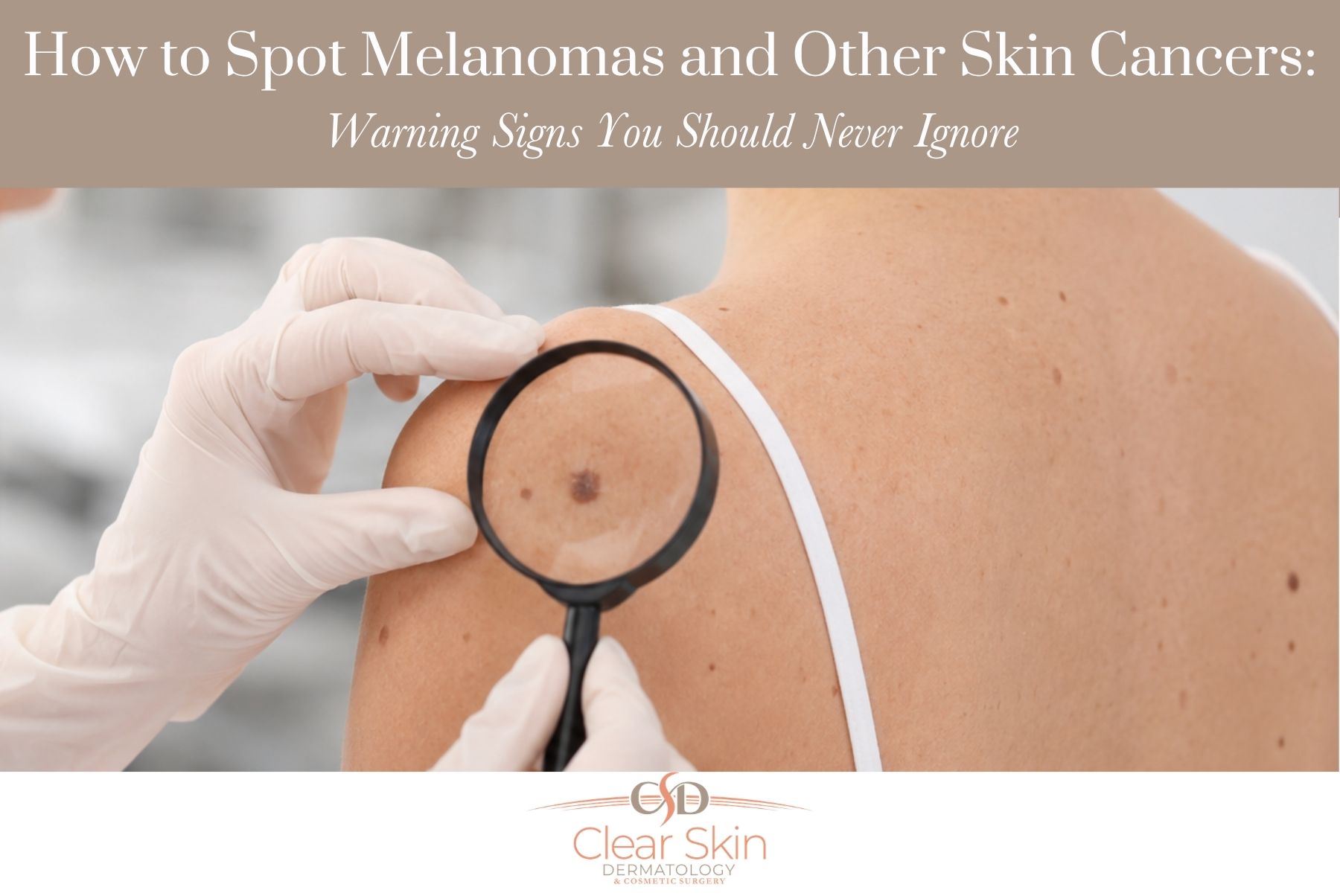
 Skin cancer is the most common form of cancer in the United States, affecting millions of people every year. The good news is that when detected early, most skin cancers—including melanoma—are highly treatable. Knowing how to recognize suspicious spots, moles, and skin changes can make a life-saving difference.
At Clear Skin Dermatology & Cosmetic Surgery, our experienced dermatology specialists provide comprehensive skin cancer screenings, diagnosis, and treatment options to help patients protect their long-term skin health. Whether you’ve noticed a changing mole or simply want peace of mind, regular skin exams are one of the best preventive steps you can take.
Understanding the Different Types of Skin Cancer
There are several forms of skin cancer, but the three most common include:
1. Melanoma
Melanoma is the most dangerous type of skin cancer because it can spread quickly to other parts of the body if not detected early. It develops in melanocytes, the pigment-producing cells in the skin.
Melanoma may appear as:
- A new dark spot on the skin
- A changing mole
- An irregularly shaped lesion
- A mole with multiple colors
2. Basal Cell Carcinoma (BCC)
Basal cell carcinoma is the most common type of skin cancer. It grows slowly and rarely spreads but can cause significant tissue damage if left untreated.
BCC often appears as:
- A pearly or waxy bump
- A flat flesh-colored lesion
- A sore that won’t heal
- Pink growths with raised edges
3. Squamous Cell Carcinoma (SCC)
Squamous cell carcinoma can develop from long-term sun exposure and may spread if not treated promptly.
Common signs include:
- Scaly red patches
- Open sores
- Wart-like growths
- Crusty or bleeding lesions
The ABCDE Rule for Spotting Melanoma
Dermatologists commonly use the ABCDE Rule to help identify suspicious moles and skin lesions.
A – Asymmetry
One half of the mole does not match the other half.
B – Border
Edges are irregular, blurred, jagged, or uneven.
C – Color
The mole contains multiple colors such as brown, black, red, white, or blue.
D – Diameter
Melanomas are often larger than 6 mm (about the size of a pencil eraser), although they can be smaller.
E – Evolving
Any mole or spot that changes in size, shape, color, texture, or symptoms should be evaluated immediately.
Other Warning Signs of Skin Cancer
Not all skin cancers look like dark moles. Be alert for:
- Sores that do not heal
- Persistent itching or tenderness
- Bleeding spots
- Crusting or scabbing lesions
- New growths that rapidly change
- Rough or scaly patches
- Dark streaks under nails
If you notice anything unusual, scheduling a professional skin evaluation is important.
Who Is at Higher Risk for Skin Cancer?
Anyone can develop skin cancer, but certain factors increase your risk:
- Excessive sun exposure
- History of tanning bed use
- Fair skin or light-colored eyes
- Frequent sunburns
- Family history of skin cancer
- Large number of moles
- Weakened immune system
- Older age
Even individuals with darker skin tones can develop skin cancer, which is why regular skin checks are recommended for everyone.
How to Perform a Skin Self-Exam
Monthly self-examinations can help you detect changes early.
During Your Self-Check:
- Examine your entire body in good lighting
- Use mirrors for hard-to-see areas
- Check your scalp, ears, nails, feet, and between your toes
- Take photos of moles to monitor changes over time
If anything appears suspicious or changes noticeably, contact a board-certified dermatologist promptly.
Professional Skin Cancer Screenings Matter
While self-exams are important, professional skin cancer screenings provide a more thorough evaluation. Dermatologists are trained to recognize subtle warning signs that may go unnoticed.
At Clear Skin Dermatology & Cosmetic Surgery, patients receive:
- Full-body skin examinations
- Mole evaluations
- Skin biopsies when necessary
- Personalized treatment recommendations
- Preventive skin health guidance
Early detection dramatically improves treatment outcomes, especially for melanoma.
Tips to Help Prevent Skin Cancer
Reducing UV exposure is one of the best ways to lower your risk.
Protect Your Skin By:
- Wearing broad-spectrum sunscreen SPF 30+
- Reapplying sunscreen every 2 hours when outdoors
- Wearing protective clothing and wide-brimmed hats
- Avoiding tanning beds
- Seeking shade during peak sunlight hours
- Scheduling routine dermatology exams
Consistent sun protection is essential year-round—not just during the summer months.
When Should You See a Dermatologist?
Schedule an appointment if you notice:
- A changing mole
- A new suspicious lesion
- Persistent redness or irritation
- Bleeding or crusting spots
- Painful or itchy skin growths
- Any lesion that concerns you
The earlier skin cancer is detected, the more effective treatment tends to be.
Frequently Asked Questions About Skin Cancer
What does melanoma usually look like?
Melanoma often appears as an irregular mole with uneven borders, multiple colors, and changes over time. However, it can vary significantly in appearance.
Can skin cancer develop in areas not exposed to the sun?
Yes. Skin cancer can develop anywhere on the body, including the scalp, soles of the feet, under the nails, and genital areas.
Are all suspicious moles cancerous?
No. Many moles are harmless, but any changing or unusual mole should be evaluated by a dermatologist.
How often should I get a skin cancer screening?
Most adults should consider annual skin exams, especially those with risk factors or a history of sun damage.
Is melanoma curable?
When caught early, melanoma is highly treatable and often curable. Early diagnosis is critical.
Can younger people develop skin cancer?
Yes. Skin cancer can affect people of all ages, including young adults and teenagers.
What causes skin cancer?
The primary cause is ultraviolet (UV) radiation from the sun or tanning beds, although genetics and immune health can also play a role.
Does sunscreen completely prevent skin cancer?
Sunscreen greatly reduces risk but should be combined with other sun-protection habits for the best results.
Should I worry about a mole that itches?
Persistent itching, bleeding, or changes in a mole should be professionally evaluated.
What happens during a skin cancer screening?
A dermatologist examines your skin from head to toe, looking for suspicious lesions or changes that may require further testing.
Schedule a Skin Cancer Screening at Clear Skin Dermatology & Cosmetic Surgery
Protecting your skin starts with early detection and expert care. If you have concerns about a mole, skin lesion, or changes in your skin, the team at Clear Skin Dermatology & Cosmetic Surgery is here to help.
Contact Information
St. Charles Office
2560 Foxfield Rd, Suite 100
St. Charles, IL 60174
📧 stc@cskinderm.com
📞 (630) 443-8855
Oak Park Office
1050 Chicago Ave
Oak Park, IL 60302
📧 op@cskinderm.com
📞 (708) 383-6366
Sycamore Office
2128 Midlands Ct, Suite 106
Sycamore, IL 60178
📧 syc@cskinderm.com
📞 (815) 895-9100
👉 Request an Appointment: Click here to schedule online